What is a Futures Contract? A Simple Analogy
At its core, a futures contract is a standardized legal agreement to buy or sell a particular asset at a predetermined price on a specified date in the future. That’s the technical definition. But let’s make it practical.
Think of a wheat farmer and a baker.
The farmer worries wheat prices might fall after harvest. The baker worries prices might rise. So today, they agree that in three months, the farmer will sell 1,000 bushels of wheat at today’s price. No surprises. No drama. Both sides lock in certainty. (It’s basically the business version of “let’s just agree now and avoid arguing later.”)
That simple story captures the futures contracts basics.
Here are the key components you should know:
- The Underlying Asset – What’s being traded. It could be oil, gold, or even a financial index like the FTSE Asia index.
- The Expiration Date – The specific future date when the contract is settled.
- Contract Size – The standardized quantity of the asset covered in one contract.
Why does this matter to you? Because futures aren’t just for farmers. Investors use them to hedge risk or speculate on price movements.
Pro tip: Always check contract size before trading—small price moves can have outsized impacts.
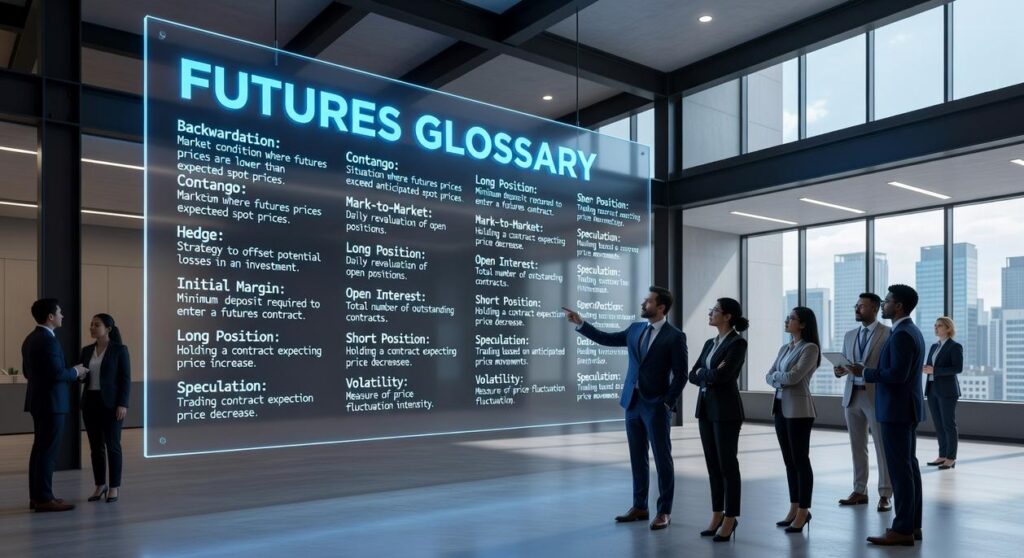
Futures Terminology You Need to Know

Let’s decode the jargon before it starts sounding like a sci‑fi script.
Spot Price is the current market price of an asset for immediate delivery. Think of it as the “buy it now” price on your favorite shopping app.
Futures Price is what traders agree to pay for that asset at a later date. It’s today’s negotiated price for tomorrow’s deal (because apparently we like scheduling our stress in advance).
Now, the Basis is simply the difference between the spot price and the futures price. Traders watch this closely since changes can signal shifting supply and demand.
When futures prices are higher than spot prices, that’s Contango. The opposite? Backwardation. Yes, it sounds like a time-travel plot twist.
Finally, Volume shows how many contracts traded during a period, while Open Interest tracks how many contracts remain active. Together, they reveal market participation and conviction.
For deeper context, explore comparing futures vs options key differences for investors.
Master these futures contracts basics and you’re already ahead.
The Two Primary Uses of Futures: Hedging and Speculation
At their core, futures markets revolve around two motivations: protection and profit. Think of it as the financial world’s version of offense and defense.
Hedging (Risk Management)
Hedging means reducing risk by locking in prices today for transactions that happen later. It’s a form of insurance. For example, an airline worried about rising jet fuel costs can buy fuel futures contracts now to secure today’s price for future delivery. If oil prices spike due to geopolitical tensions, the airline is protected. (It’s the corporate equivalent of grabbing concert tickets before they sell out and prices skyrocket on resale.)
Some critics argue hedging limits upside potential. That’s true—if fuel prices fall, the airline misses savings. But for most businesses, stability beats gambling on volatile markets.
Speculation (Seeking Profit)
Speculators, by contrast, accept risk in pursuit of returns. They use futures contracts basics to bet on price direction without owning the asset. For instance, if a trader believes the FTSE Asia index will rise, they can go long on an index future. If correct, they profit from the increase—often using leverage to amplify gains (and losses).
It’s less “Top Gun Maverick,” more calculated chess match.