
If you’ve ever heard traders talk about oil, stock indexes, or currencies moving on “futures,” you might have wondered what that actually means. This guide delivers futures contracts explained in clear, simple terms—so you can understand what they are, how they work, and why they matter in global markets. Many investors feel intimidated by futures because of their complexity and perceived risk. We break down the core mechanics, essential terminology, and real-world uses step by step. Drawing on deep market analysis and practical trading insights, this article will move you from confusion to clarity and give you a solid foundation in futures.
The Core Mechanics: How a Futures Contract Actually Works
The first time I watched a futures trade execute, it felt oddly anticlimactic. No trucks of wheat. No vaults of cash. Just numbers moving on a screen (not exactly Wall Street movie material). But beneath that simplicity sits a powerful idea.
At its core, a futures contract is a standardized legal agreement to buy or sell a specific asset at a predetermined price on a set future date. When people search for futures contracts explained, this is the foundation: price today, transaction later.
The Role of the Exchange
Exchanges like CME or SGX act as intermediaries. They:
- Standardize quantity and quality
- Fix delivery dates
- Guarantee performance through clearinghouses
This structure reduces counterparty risk (the danger that the other party won’t fulfill their side of the deal).
A Simple Analogy
Imagine a farmer locking in a wheat price with a bread company months before harvest. The farmer avoids price drops. The company avoids price spikes. Both trade uncertainty for predictability.
Settlement Types
- Physical delivery: Actual goods change hands (rare for retail traders).
- Cash settlement: Parties exchange the price difference, common in index futures.
Some critics argue futures are just speculation. Sometimes, yes. But at their best, they’re risk management tools (and surprisingly practical ones).
Key Terminology Every Aspiring Trader Must Know
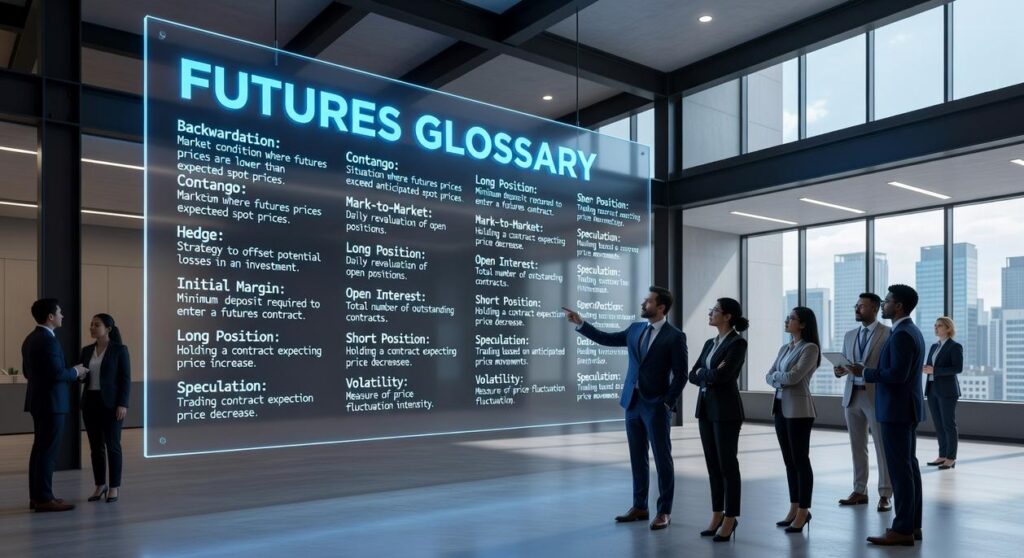
Before risking real money, you need the language of the market down cold. Think of this as the difference between reading subtitles and actually speaking the language.
Leverage vs. Margin: Power and Responsibility
Leverage is the ability to control a large contract value with a relatively small amount of capital. For example, with 10:1 leverage, $1,000 controls $10,000 worth of a futures position. Sounds powerful? It is. But leverage magnifies both gains and losses. A 5% move against you doesn’t feel small anymore.
Some traders argue high leverage is the fastest path to meaningful returns. Others call it financial caffeine—exciting but dangerous. The truth sits in between: leverage is a tool, not a strategy. (Pro tip: start smaller than you think you need.)
Margin is often misunderstood. It’s not a down payment like buying a house. It’s a good faith deposit required to open a trade (initial margin) and keep it open (maintenance margin). Drop below maintenance? You’ll face a margin call.
Margin is about staying in the game; leverage is about how big you play.
Mark-to-Market and Expiration: Time Matters
Mark-to-market is the daily settlement process where profits are added and losses deducted based on closing prices. Unlike stocks, you don’t wait until selling to “realize” results.
Then there’s the expiration date—when the contract ends. Traders can close positions or “roll over” into a later contract to maintain exposure. Compare this to spot trading, where assets don’t expire. For a deeper breakdown, see how futures trading differs from spot market trading.
Understanding these mechanics makes futures contracts explained far less intimidating—and far more strategic.
The Two Primary Uses: Hedging vs. Speculation

At their core, futures markets serve two distinct purposes: risk reduction and profit seeking. Understanding both gives you clarity—and potentially an edge.
Hedging for Risk Management
Hedging means taking a position to offset potential losses in another investment or business exposure. Producers, consumers, and portfolio managers use futures to stabilize costs and revenues. For example, an airline worried about rising jet fuel prices might buy oil futures today to lock in current rates. If fuel prices spike later, gains in the futures contract help offset higher operating costs.
The benefit? Greater certainty. Businesses can budget accurately, protect margins, and avoid unpleasant surprises (which shareholders rarely enjoy).
Speculating on Price Movements
Speculators, on the other hand, aim to profit from price changes without owning the underlying asset. A trader might buy oil futures expecting prices to rise, then sell at a higher level. They accept risk in pursuit of returns.
Importantly, speculators provide liquidity—the ease of entering and exiting trades—which makes hedging possible in the first place.
Comparing Motivations
- Hedgers: Reduce uncertainty and protect operations
- Speculators: Embrace uncertainty to generate profit
Grasping these dynamics—especially when reviewing futures contracts explained in market analysis—helps you better evaluate opportunity, risk, and timing.
Understanding the Inherent Risks of Trading Futures
Trading futures can amplify gains—but it can also magnify losses just as quickly. The biggest risk is leverage, which means controlling a large contract value with a relatively small margin deposit. Because of this structure, even a small adverse price move can result in losses that exceed your initial investment. That’s the double-edged sword traders often underestimate.
Volatility risk is another major factor. Futures markets can swing sharply within minutes due to economic data, geopolitical events, or sudden shifts in sentiment. Rapid price changes may trigger margin calls (a broker’s demand for additional funds to maintain your position) before you have time to react.
Liquidity risk also matters. While major contracts are easy to enter and exit, thinner markets can make it difficult to close positions at your desired price—especially during stress events.
If you’re new to futures contracts explained in the section once exactly as it is given, focus first on position sizing and stop-loss discipline.
Building Your Foundational Knowledge for the Market
You came here to get futures contracts explained, and now you have a clear grasp of the core agreement, essential terminology, and the primary ways traders use them. What once felt complex is now more manageable—because at their core, futures are simply tools for managing price risk or speculating on market direction.
The real challenge isn’t understanding the basics anymore—it’s applying them with confidence. Your next step is to explore specific markets like commodities or stock indices and start paper trading to build real-world experience without financial risk.
Thousands of traders sharpen their edge this way before committing capital. Start practicing today and turn your knowledge into confident market action.